Choosing nickel alloy vs stainless steel depends on corrosion exposure, temperature, mechanical requirements, and lifecycle cost. Wuxi Xinshanhu Steel Co., Ltd. supports overseas buyers with customized steel supply, quality documentation, and export coordination.
Nickel alloys and stainless steel are widely used in industrial equipment, but they differ in composition and performance. Stainless steel typically contains at least 10.5% chromium, while nickel alloys generally contain a higher proportion of nickel and are engineered for specific demanding environments.
Stainless steel is often a cost-effective choice for general corrosion resistance and everyday industrial service. Nickel alloys are commonly selected when standard stainless steel cannot adequately handle aggressive chemicals, extreme temperatures, or specialized operating conditions.
| Comparison |
Stainless Steel |
Nickel Alloy |
| Main composition |
Iron-based alloy containing chromium |
Nickel-rich alloy with elements such as chromium, molybdenum, or copper |
| Corrosion resistance |
Good to excellent, depending on grade and environment |
Can provide superior resistance in selected aggressive environments |
| High-temperature performance |
Depends on grade and operating conditions |
Selected grades offer excellent high-temperature strength or oxidation resistance |
| Mechanical properties |
Suitable for a wide range of industrial uses |
Varies by alloy; some grades offer high strength under demanding conditions |
| Initial cost |
Generally lower |
Generally higher |
| Common grades |
304, 316L, 321, duplex 2205 |
Inconel 625, 718; Hastelloy C276; Monel 400 |
Neither material family is universally better. The correct choice depends on the operating medium, temperature, pressure, mechanical loading, and required service life.
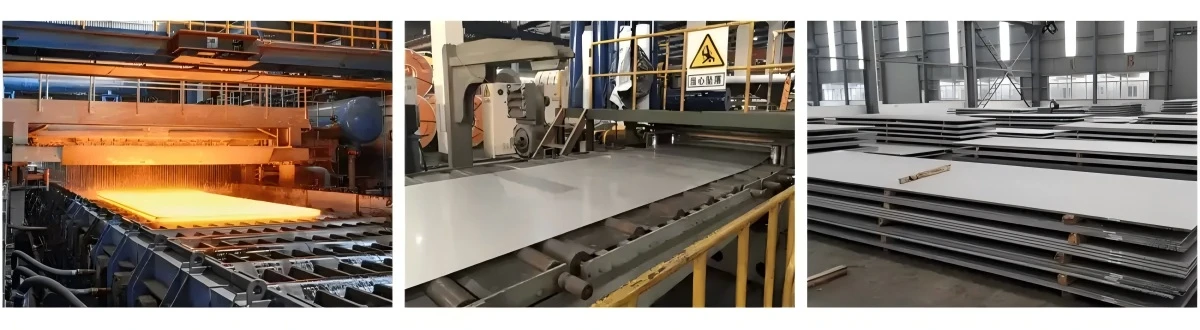
How Corrosion Resistance, Temperature and Cost Affect Material Selection
Corrosion resistance: Stainless steel grades such as 304 perform well in many general industrial environments, while 316L offers improved resistance to many chloride-related corrosion conditions. However, highly aggressive acids or complex chemical mixtures may require specialized nickel alloys such as Hastelloy C276 or C22. Actual suitability must be verified for the specific medium and concentration.
Temperature performance: Some nickel alloys, including Inconel 600 and 625, are used in high-temperature equipment because of their combination of strength, oxidation resistance, and corrosion performance. Stainless steel grades may also perform well at elevated temperatures, but the appropriate choice depends on temperature, stress, and exposure time.
Cost and service life: Stainless steel is usually more economical for general applications. Nickel alloys typically have higher initial material costs, but they may reduce maintenance or replacement needs in severe operating environments. Buyers should compare lifecycle costs rather than purchase price alone.
| Application |
Materials to evaluate |
Main consideration |
| General industrial piping |
304 or 316L stainless steel |
Corrosion conditions and budget |
| Chemical processing equipment |
316L or Hastelloy grades |
Chemical compatibility |
| High-temperature equipment |
Suitable stainless steel or Inconel grades |
Temperature and mechanical loading |
| Marine equipment |
316L, duplex, or selected nickel alloys |
Chloride exposure and localized corrosion |
| Heat exchangers |
Stainless steel or nickel alloys |
Process medium, temperature, and heat-transfer requirements |
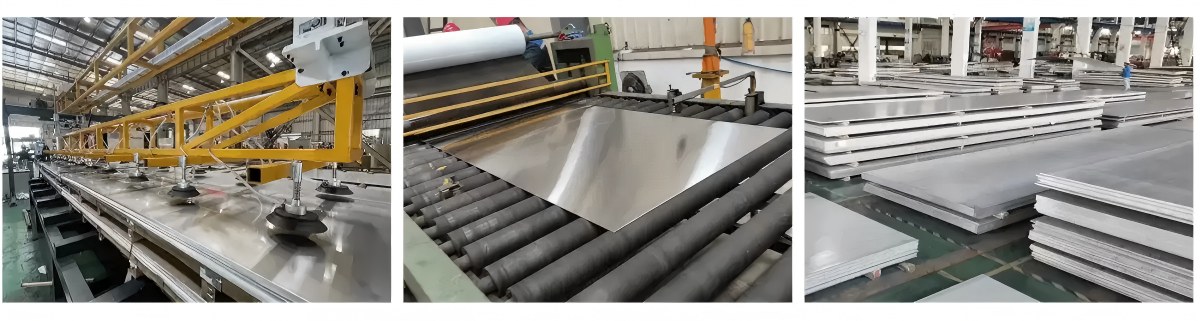
For international buyers, material selection should be supported by reliable manufacturing, consistent quality, and traceable documentation.
Wuxi Xinshanhu Steel Co., Ltd. supplies stainless steel products, while its alloy business offers selected nickel-based alloys, including Inconel, Hastelloy, and Monel grades, subject to product specifications and availability. Customized dimensions, cutting, and project-specific requirements can be discussed during quotation.
Before placing an order, confirm:
Material grade and applicable standard.
Product form, dimensions, and quantity.
Operating temperature, pressure, and chemical medium.
Required material certificates and inspection reports.
Production lead time, packaging, and delivery terms.
Clear technical specifications help suppliers recommend suitable materials and support quality control throughout production and export.
FAQ
1. Is nickel alloy better than stainless steel?Not always. Stainless steel is suitable for many industrial applications, while nickel alloys may be preferable in highly corrosive or high-temperature environments.
2. Why are nickel alloys usually more expensive?Their higher nickel content, alloying elements, and specialized production or processing requirements can increase material costs.
3. Which material is better for chemical processing?The answer depends on the chemical medium, concentration, and temperature. Stainless steel may be sufficient for moderate conditions, while selected nickel alloys can offer better resistance to aggressive chemicals.
4. Can stainless steel be used at high temperatures?Yes. Some stainless steel grades are suitable for elevated-temperature service. Selection should consider temperature, mechanical stress, oxidation, and the relevant design code.
5. What information should buyers provide when requesting a quotation?Specify the grade, product form, dimensions, quantity, operating conditions, applicable standards, inspection requirements, and delivery destination.

