A stainless steel round pipe combines corrosion resistance, mechanical strength and formability. Typical selections:
304/304L: general purpose; L grade mitigates weld sensitization.
316/316L: Mo-alloyed, better chloride-pitting resistance than 304.
321/347: Ti/Nb-stabilized for welded high-temperature service.
310S/309: high-temperature oxidation resistance.
904L/254SMO: high-Mo/Ni for aggressive media.
Duplex 2205/2507: high strength + pitting/crevice resistance for marine/chemical duty.
Standards & Tolerances for Stainless Steel Round Pipes
Use standards per duty: ASTM A312/A269/A270, ASME B36.19M, EN 10216-5/ISO 1127, ASME BPE (hygienic). Specify OD/WT tolerances, surface roughness Ra (e.g., ≤0.5–0.8 μm for hygienic; lower after electropolishing), NDT (eddy current/UT/hydro), MTR (EN 10204 3.1), PMI, mechanical and corrosion tests (e.g., ASTM G48 for duplex, ASTM A262 for IGC).
Seamless: piercing–hot rolling–cold drawing–sizing; preferred for high pressure/temperature.
Welded: formed from coil + TIG/laser/ERW weld, then solution annealed and sized; tight dimensional control and cost-effective for most services.
Heat treatment: solution anneal (~1040–1120 °C) + rapid cooling to restore corrosion resistance.
Surface: 2B/BA, mechanical polish (#180–#400), electropolish; hygienic services often need polished ID + endoscopy.
Using Stainless Steel Round Pipes: Practical Field Notes
Corrosion/Media: control chlorides; choose 316L/high-Mo/duplex for pitting risk; watch crevice/under-deposit corrosion.
Welding: proper filler (ER308L/316L/2209), argon purging for root, then pickling & passivation; manage heat input to avoid sensitization.
Hygienic duty: follow CIP/SIP, particle/bioburden limits, and low-chloride/low-sulfur chemistries.
Design: set support spacing, allow thermal expansion (loops/bellows), avoid galvanic coupling with CS/Cu (insulate).
Forming: mandrel bending; min bend radius often ≥2–3× OD (depends on WT/process).
Pressure & testing: size per ASME B31.3/EN 13480; conduct hydro/pneumatic tests to code.
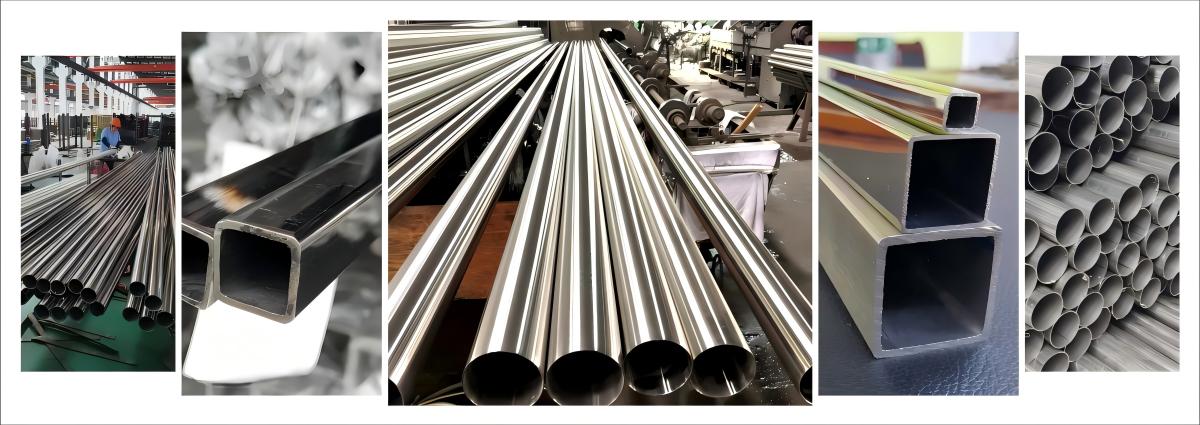
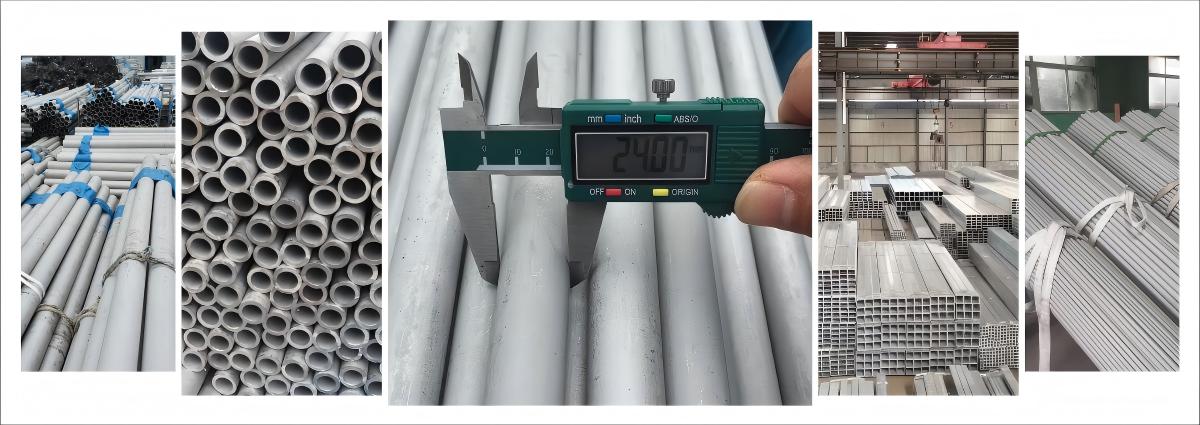
QA/QC & Documentation for Stainless Steel Round Pipes
Chem/mech tests to spec;
NDT: eddy current/UT/hydro; 100% seam inspection for welded pipes;
Dimensional/visual: OD/WT/straightness/ovality/end-squareness;
Surface & Ra reports; passivation/electropolishing records;
Traceability: MTR (3.1), heat numbers, WPS/PQR, NDT and pressure test reports, borescope images for hygienic lines;
Packaging: bagged & capped ends, moisture protection, isolation from carbon steel, chloride-free storage.
Pitfalls & Quick Picks (Stainless Steel Round Pipe Cheat-Sheet)
304 near shoreline → pitting risk; prefer 316L/high-Mo/duplex.
Skipping post-weld pickling/passivation → reduced corrosion resistance.
Chloride-bearing insulation → potential stress corrosion cracking.
No purge on root → oxidized ID harms hygiene/corrosion.
Mixed-metal joints → manage galvanic corrosion with insulation kits.

